• Countries eager to reopen to travel as Covid- 19 pandemic recedes
    Countries eager to reopen to travel as Covid- 19 pandemic recedes

    By David Koenig / Menelaos Hadjicostis / AP

    Countries reliant on tourism are racing to reopen borders and revive economies decimated by the pandemic.

    The World Travel & Tourism Council estimates that the sector lost nearly $4.5 trillion and 62 million jobs last year. Airlines alone lost $126 billion last year and are on track to lose another $48 billion this year, according to their largest trade group.

    The rollout of vaccines against COVID-19 is giving government officials in many countries new confidence to welcome visitors. But time is critical.

    “Summer is a strong season for most markets, particularly Europe and the UK. We really hope to see restrictions ease,” said Virginia Messina, interim leader of the World Travel & Tourism Council.

    The patchwork of rules around the globe can be hard to follow for anyone planning a trip. Cyprus, for instance, has restrictions in place for countries deemed as higher risk, requiring arriving passengers to have a negative PCR test that’s valid 72 hours prior to their departure and to undergo a new test upon arrival. They also have to self-isolate in Cyprus until their test results are issued.

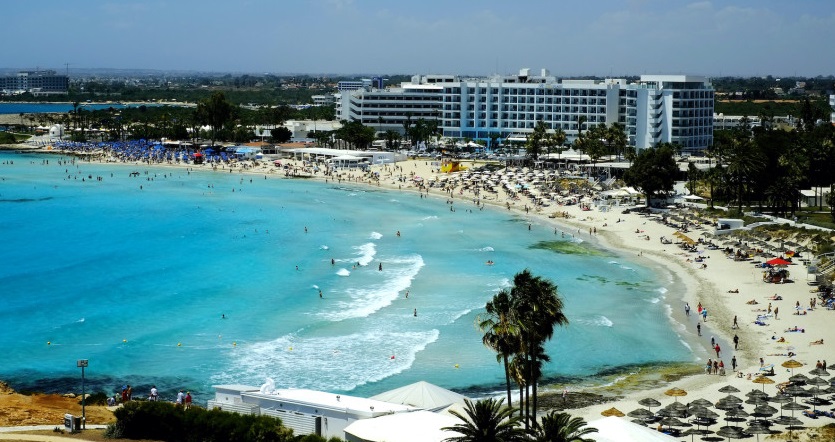
    Constantinos Victoras, general manager of NissiBlu Hotel, situated near Ayia Napa’s famed white-sand beach, says even though the infection rate in Cyprus has dropped significantly in the last two weeks, it won’t be until late June when things will be clear enough for tour operators and airlines to ramp up bookings.

    Agatha and Simon Godurkiewicz of Sweden, said they chose to holiday on the island out of fatigue with the pandemic, and that people simply want to get on with their lives and return to some semblance of normality.

    Here’s how different regions are trying to reopen to travel:

    EUROPE

    Europe has been opening slowly, testing the patience of Mediterranean countries that rely heavily on tourism, including Greece, Spain and Turkey. That is changing now, as European Union ambassadors agreed last week to allow in visitors who are fully vaccinated or are from a now-expanded list of countries whose citizens are deemed to be safe.

    EU member countries still have to approve the changes, and it’s not clear exactly when they would take effect.

    Prime Minister Pedro Sanchez said Friday that Spain will let British and Japanese visitors enter the country starting Monday if they have been vaccinated and people from other countries, including the United States, on June 7.

    Tourists are already beginning to show up in Greece after authorities there decided this month to accept vaccination and test certificates from the European Union and 21 other countries.

    On the Greek island of Naxos, business owners began pulling tables and chairs out of storage, power-washing wooden decks and reopening once-jammed seaside tavernas.

    “People here are optimistic and, indeed, there have been many bookings in the last two weeks,” Naxos Mayor Dimitris Lianos said. “There could be a significant comeback of the tourist season even in the latter half of the year. I dare to say it.”

    Croatia has also reopened — one of the few spots in Europe that’s easy for Americans to visit. Delta Air Lines and United Airlines have announced direct flights from New York to Dubrovnik this summer.

    ASIA

    The virus is surging again across parts of Asia, causing several nations to halt cautious steps they had been taking to reopen.

    Hong Kong and Singapore postponed a quarantine-free “travel bubble” for a second time after a new outbreak, and Hong Kong lengthened mandatory quarantines for many unvaccinated visitors. China set up checkpoints at toll booths, airports and train stations in Liaoning province, site of new cases this month — travelers must show proof of a recent negative test for the virus.

    Thailand, which closed its borders and managed to keep outbreaks under control for most of last year, gradually began allowing entry to some foreign visitors in the fall under strict controls. But the country reversed course when it became overwhelmed by its worst outbreak in late March.

    Bangkok closed entertainment venues and parks, ordered more people to work from home, and banned outdoor dining. Streets in the capital and many of Thailand’s resorts are nearly deserted, and people who have lost tourism-related jobs are second-guessing the authorities.

    MIDDLE EAST AND AFRICA

    At the height of the pandemic last year, the United Arab Emirates closed its borders and shuttered airports to travelers. The capital, Abu Dhabi, still has strict measures including mandatory quarantines even for fully vaccinated residents returning from certain countries. But the UAE’s biggest city, Dubai, has opened its doors to travelers since last July with few restrictions beyond a negative COVID-19 test.

    Dubai — home to the world’s busiest airport for international travel — is courting visitors fleeing lockdowns in Europe with open beaches, bars, hotel pools, restaurants, movie theaters, theme parks and spas. Social distancing and mask mandates are in place.

    Meanwhile, the Gulf’s largest country of Saudi Arabia is not permitting tourists into the country. Saudi citizens, who have largely been banned from travel since March 2020, are allowed to travel abroad starting this month if they have been vaccinated or recently recovered from the virus.

    Egypt is trying to draw more foreign tourists even as it deals with a new wave of infections. It exempted beaches, cafes and restaurants tied to tourist hotels from new restrictions, like an earlier curfew and the closure of public beaches and parks during the Eid holiday. It even lowered the cost of tourist visas, although it still requires a negative COVID-19 test before entering the country.

    LATIN AMERICA AND CARIBBEAN

    Visitors to the tourism-dependent Caribbean tumbled by two-thirds last year to levels not seen since the 1980s. Bermuda was among the hardest hit, suffering an 84% drop.

    A handful of islands, including Bonaire, Martinique and Montserrat, still ban travel from most countries. Elsewhere, tourists are trickling back under requirements that include electronic monitoring. Some islands, including St. Vincent and the Grenadines, have created “bubble resorts” to take tourists. Cruise lines are planning to shift ships from the U.S. to Caribbean ports this summer.

    The U.S. Virgin Islands have been the region’s success story this year, with arrivals down a modest 27% from January through March — much of that due to Americans who are forbidden in other places and can visit the U.S. territory without a passport if they avoid going through another country on the way.

    Mexico has no flight restrictions, no requirements for visitors to pass a test or quarantine upon arrival. That has kept a reduced but steady flow of tourists, especially to beach destinations.

    Mexico’s laid-back approach, however, could be creating a backlash in the Caribbean coast state of Quintana Roo, which includes Cancún and Cozumel and where tourism accounts for 87% of the economy. Infection and hospitalization rates are rising, and stricter capacity limits have been imposed in public places.

    U.S. AND CANADA

    The U.S. continues to bar most visitors from Europe, China, India, Brazil and other places. Inbound international travelers, including American citizens, must pass a COVID-19 test before boarding flights. The State Department discourages foreign trips, labeling most of the world’s countries high-risk.

    The border between the U.S. and Canada remains closed to nonessential travel through June 21.

    Domestic air travel in the U.S. is nearly back to 2019 levels, but travel-industry groups are growing impatient with what they see as an overly timid response by the Biden administration to allowing more international visitors.

    “As we continue to see vaccination rates increase and infection rates decrease, it’s absolutely critical from an economic standpoint to reopen international travel,” said Tori Emerson Barnes, executive vice president of the U.S. Travel Association.

    28 May , 2021

    Photo: A view of Nissi beach, Cyprus -AP

    • Connecting you with the world of travel and tourism

      Media Partners

      Asia Amusement & Attractions Expo 2026

      Theme Park Expo Vietnam 2025

      Asia Pool & Spa Expo , May 10 – 12, 2025 , Guangzhou , China

      KAZAKHSTAN International Exhibition “Tourism & Travel” Almaty, Kazakhstan

      Nihao China- Beyond your imagination

      China extends visa-free

      policy to UK, Canada

      China has decided to extend its visa waiver policy to ordinary passport holders from Canada and the United Kingdom starting Tuesday, when the Chinese New Year begins, a Foreign Ministry spokesperson announced on , saying the move aims to further facilitate cross-border travel.

      According to the spokesperson, ordinary passport holders from the two countries can enter China without visa and stay for up to 30 days for business, tourism, family/friends visit, exchange and transit purposes.The policy will be effective until Dec 31.

      Air India Orders 30

      Boeing 737 MAX Jets

      Air India  has ordered 30 more fuel-efficient 737 MAX jets, expanding its Boeing order book to nearly 200 airplanes across the company’s single-aisle and widebody airplane families. Boeing and Air India  announced an order for 30 fuel-efficient 737 MAX jets at the annual Wings Airshow in Hyderabad.

      The airline finalized an incremental purchase of 20 737-8 jets this month and an order for 10 737-10 airplanes was previously unidentified on Boeing’s Orders & Deliveries website. Both purchases exercised existing options as Air India expands its route network to meet rising travel demand.

      Air India will operate the new 737-8s, leveraging their dispatch reliability, fuel efficiency and range flexibility on high-frequency, domestic and short-haul regional routes. The airline also plans to deploy the larger 737-10 to maintain operational commonality and carry more passengers at the lowest cost per seat among single-aisle aircraft.

      As Air India expands its fleet and network, Boeing’s Commercial Market Outlook forecasts the Indian and South Asian region will need nearly 3,300 new airplanes over the next two decades with 90% of those single-aisle jets like the 737 MAX. ( February 2 , 2026 )

      WTTC chooses  Madrid

      for new Global Office

      London, UK: The World Travel & Tourism Council (WTTC) announced that its Operating Committee has unanimously approved Madrid in Spain as the location for the organisation’s new Global Office.

      Five destinations expressed interest in hosting the Global Office – Dubai (UAE), France, Italy, Spain and Switzerland – with the evaluation criteria based on six areas: office rental and operating costs; the tax, incentives and competitive environment; fast-track visas and work permit frameworks in the destination; government support; cost of living to attract and retain talent; and proximity to international organisations.

      The decision to choose Madrid was endorsed by all 17 members of WTTC’s Operating Committee, following a comprehensive assessment of WTTC’s long-term strategic and operational needs. Members agreed that Madrid offered the most attractive option due to the city’s competitiveness, a more favourable tax environment, government support, easier visa processing for employees and overall lower operating costs. Challenges linked to Brexit, such as constraints on talent mobility, made the UK less attractive as WTTC wishes to further build its leadership position and become even more agile in the sector.

      Madrid was also selected for its strong international connectivity via Madrid-Barajas Airport, competitive business environment, incentives from government, synergies with international organisations in the sector such as UN Tourism and alignment with WTTC’s global mission. The new office will form a central part of WTTC’s worldwide network, supporting its highly-respected advocacy, research and member engagement activities across the globe.

      Bangkok named Asia’s best

      holiday destination for 2025

      Bangkok has been ranked as the best city to visit in Asia for 2025 by Smart Travel Asia, a leading digital travel magazine, based on the opinions of hundreds of thousands of travellers and readers worldwide.

      The city received the highest votes in the “Best Holiday Destination in Asia” category, retaining its top position for the second consecutive year.

      Smart Travel Asia highlighted Bangkok’s strengths as its 24-hour vibrancy and diverse experiences, including food, culture, shopping, and the friendliness of its people, describing it as a “city full of energy and colour, day and night.”

      The city’s dominance stems from several compelling factors. Bangkok has emerged as a paradise for food enthusiasts, offering everything from legendary street food stalls to Michelin-starred restaurants and panoramic 360-degree rooftop bars. Its cultural and heritage sites, including the iconic Wat Phra Kaew, Wat Arun, and Wat Pho temples, remain major attractions to international tourists.

      Additionally, from luxury malls in the city centre to the Chatuchak weekend market, Bangkok caters to every type of shopper. Affordability and friendliness also play a key role, as Bangkok remains an accessible living cost destination where welcoming smiles continue to charm travellers.

      In the Smart Travel Asia 2025 rankings, Bali (Indonesia) and Tokyo (Japan) shared second place behind Bangkok, while Seoul (the Republic of Korea) and Luang Prabang (Laos) tied for fourth. Thailand further strengthened its tourism appeal with Chiang Mai placing third and Phuket sharing fifth place with Hong Kong (China).

      Having the three cities, Bangkok, Chiang Mai, and Phuket, in the top 10 highlights the diversity and appeal of Thailand’s tourism offerings for travellers worldwide. — VNA/VNS ( Oct.12, 2025)

      Gulf Cooperation Council Tourism 

      Dubai – As tourism destinations in the Gulf Cooperation Council (GCC) continue to grow, involving local communities in destination development has become increasingly vital for long-term success.

      Abu Dhabi’s Tourism Strategy 2030 aims for 39.3 million visitors per year, while Saudi Arabia’s Vision 2030 targets 150 million domestic and international visits, emphasising how tourism is being established as a key element of economic diversification throughout the region.

      At Arabian Travel Market (ATM) 2025, industry leaders emphasised that sustainable revitalisation of destinations must align tourism investments with community partnerships, cultural authenticity, and immersive guest experiences to provide lasting value for both residents and visitors.

      During the session on “Considerations and Implications of Involving Communities in Destination Revitalisation” on the ATM 2025 Global Stage, experts shared insights into building resilience, enhancing local prosperity, and ensuring tourism growth is both inclusive and enduring.

      Arabian Travel Market 2025, held under the theme “Global Travel: Developing Tomorrow’s Tourism Through Enhanced Connectivity”,  featured more than 200 speakers across three content stages and welcomes over 55,000 travel professionals from 166 countries.

      Messe Berlin India launched 

      to drive growth of ITB India 

      Messe Berlin announces the official launch of Messe Berlin India, a newly incorporated subsidiary that underscores the company’s long-term commitment to one of Asia’s fastest-growing markets. Headquartered in Delhi , the new entity will serve as a strategic base for expanding ITB India and launching future projects tailored to the Indian market. With this establishment, Messe Berlin is reinforcing its vision of India as a regional hub for innovation, collaboration, and sustainable business growth within the exhibition and events industry.

      “Messe Berlin’s presence in India reflects our strategic intent to strengthen our international reach by being where the growth is. India is a key market for us — vibrant, diverse, and full of opportunities. With Messe Berlin India, we are laying down long-term foundations to build strong partnerships, support local industries, and elevate our global platforms,” said Dr. Mario Tobias, CEO, Messe Berlin.

      ITB India, inaugurated in 2023, continues as the flagship event under the new subsidiary. Held annually, ITB India is a three-day B2B travel trade show and convention that connects the global travel and tourism industry with the Indian market. Alongside MICE Show India, Travel Tech India, and the ITB India Conference, ITB India serves as a unique platform to forge new partnerships, strengthen existing ties, and capitalize on the fast-growing potential of the Indian and South Asian travel economies. The show hosts key players from the MICE, Leisure, Corporate Travel, and Travel Technology sectors. The upcoming edition, ITB India 2025, will take place from 2 – 4 September 2025  in Mumbai.

      FACTS —

      Tourism helps in:

      👉Reducing poverty

      👉Reducing Inequalities

      👉Promoting gender equality

      👉Fostering decent work and economic growth

      World Tourism Day 2021: ‘Tourism for Inclusive Growth’

      In 2019, Travel & Tourism’s direct, indirect and induced impact accounted for:
      -US$8.9 trillion contribution to the world’s GDP
      -10.3% of global GDP
      -330 million jobs, 1 in 10 jobs around the world
      -US$1.7 trillion visitor exports (6.8% of total exports,
      28.3% of global services exports)
      -US$948 billion capital investment (4.3% of total
      investment)