Cultural and Natural Heritage Sites of Nepal
By Ramesh Tiwari —
Kathmandu valley, with an area of 570 sq. kilometers situated at an altitude of 1350 – 1500 meter, is not only a melting pot but a living museum as well. The capital city of Nepal is inhabited by most of the ethnic groups of the country these days, though Newars were the indigenous inhabitants of the city in the earlier period of history. Kathmandu valley is rich in cultural heritage with seven world heritage sites within the radius of 15 kilometers. You will find very few places in the world with so many heritage sites in a small area like Kathmandu.
“Heritage is our legacy from the past, what we live with today, and what we pass on to future generations. Our cultural and natural heritages are both irreplaceable sources of life and inspiration. World Heritage Sites belong to all the people of the world, irrespective of the territory on which they are located,” United Nations Educational, Scientific and Cultural Organization (UNESCO) states on the importance of world heritages.
The UNESCO identifies and guides for preservation of cultural and natural heritages in accordance with the Convention concerning the Protection of the World Cultural and Natural Heritage adopted in 1972. The World Heritage Committee implements the World Heritage Convention and includes natural and cultural properties with outstanding universal importance in the World Heritage List. The committee is also authorized to include the properties on the List of World Heritage in Danger.
Kathmandu Valley, with a history of around 3000 years of civilization, is rich in cultural heritages in comparison to other countries of South Asia. The seven monuments of Kathmandu, Patan and Bhaktapur were designated world heritage sites in October 1979. The Cultural Sites included in the world heritage list are-
1- Kathmandu Durbar Square
2- Patan Durbar Square
3- Bhaktapur Durbar Square
4-Changu Narayan Temple
5- Pashupatinath Temple
6- Swayambhunath Stupa
7-Boudanath Stupa
8- Lumbini
Natural Sites in the world heritage list –
9- Chitwan National Park
10- Sagarmatha National Park
The seven Monument Zones located in the Kathmandu valley are the center of attractions for tourists visiting Nepal, where you will find a large number of historical palaces and temples. The Kathmandu Durbar Square (Hanuman Dhoka), Durbar squares of Patan and Bhaktapur were the powerful centers of ruling class during the reigning period of Malla , Ranas and Shah dynasties ,whereas Swayambhu, Baudanath, Pashupatinath and Changu Narayan temple are popular religious destinations .
The eternal Buddha eyes in the large stupas of Swayambhu and Boudhanath are source of inspirations to all the religious communities of the world. Both Buddhism and Hinduism religions prospered in Nepal beginning from the 5th century AD and mostly in the three centuries between 1500 and 1800 AD. These monuments of the Kathmandu valley with unique architecture and craftsmanship are admired by the tourists and personalities all over the world.
According to WHC, the Monumental Zones represent the highly developed architectural expression of religious, political and cultural life of Kathmandu Valley, with a concentration of monuments unique and unparalleled in the world. Kathmandu is an exotic and fascinating showcase of a very rich culture, art and tradition. It boasts an unique symbiosis of Hinduism, Buddhism and Tantrism in its culture, which is still as alive today as it was hundreds of years ago.
Most of the travel writers and visitors have highly evaluated unique architectural heritage of temples, palaces and courtyards located in the three Durbar Squares of Kathmandu valley. Kumari Ghar, the house of living goddess Kumari built in 1757 AD, is one of the most popular monuments in the Kathmandu Durbar Square. The living goddesses are regarded the incarnation of Goddess since a long time.
The Taleju Temple, Krishna temple, Jagannath temple, Shiva – Parvati temple, Kal Bhairab, Basantpur Durbar Chowk, Gaddi Baithak, statue of King Pratap Malla, Big Bell, and Kasthamandap constructed from the wood of a single tree are famous monuments in the Kathmandu Durbar square.
The oldest Buddhist stupa in the world, Swoyambhunath stupa, is situated on the top of a hill in the western part of Kathmandu and is a cultural heritage with numerous temples. People visit the hillock to view Kathmandu valley and snow-clad Himalayan range. The statues of Amitabh Buddha, Avlokeswar and Padmasambhav and replica of Tare Gumba built under the initiatives of Tilichho Khangshar Sewa Samiti, Manang in 2007 are major attractions of Swoyambhunath area.
Boudhanath , the largest stupa of Nepal , is believed to have been built in the 5th century AD during rule of the Lichhavi kings . A total of 108 Buddha images and 147 insets of prayer wheels with the famous mantra’ Om Mani Padme Hum ‘are attractions for domestic and foreign tourists visiting the beautiful heritage site.
Another monument listed in the world heritage site Pashupatinath is one of the pilgrimage destinations for more than 1 billion Hindus. The present pagoda style temple with two-tiered golden roof and four silver doors is said to have been constructed in 1697 AD, but Pashupatinath temple’s existence dates back to 400 A.D. Bagmati river, Guheshwori temple, hundreds of temples in Kailash and other areas of Pashupatinath and crematorium place of Hindus – Arya Ghat are some of the attractions of the site.
Pashupatinath , the most sacred Hindu temple dedicated to Lord Shiva , is one of the pilgrimage for Hindus and thousands of Hindu devotees from India visit the temple during Shivaratri festival every year in February.
Similarly, Lalitpur or Patan across the Bagmati River is an ancient city of great historic and cultural interest. The city founded in 3rd century AD is very popular in handicrafts. The courtyards in Patan Durbar Square, Krishna Mandir, Bhimsen and Viswa Nath temples, Taleju and Golden Temple, many stupas, sculptures and shrines are marvelous heritages of the city.
Bhaktapur Durbar Square is another world heritage with lots of monuments including palaces, courtyards, pagodas, shrines and monasteries. A tourist finds in spiritual world while visiting the Lion Gate, Golden Gate, 55 Windows Palace, Nyatapole and Dattatreya temples among others in Bhaktapur (Bhadgaon). Another heritage site Changu Narayan Temple is the oldest temple in Kathmandu valley, which dates back to 4th century AD.
Lumbini, the birthplace of Lord Buddha, was designated a world heritage site in December 1997. Siddhartha Gautama, the Lord Buddha, was born in 623 B.C. in the famous garden of Lumbini, which later became a place of pilgrimage for millions of Buddhists around the world. Indian emperor Ashoka erected one of his commemorative pillars there. The archaeological remains of the Buddhist viharas (monasteries) and stupas (memorial shrines) from the 3rd century BC are proof of Lumbini having been a center of pilgrimage for centuries.
Besides these eight cultural heritages listed in the World Heritage Sites, Sagarmatha National Park and Chitwan National Park were listed as the Natural Heritage Site by UNESCO in 1979 and 1984 respectively. The highest peak Mount Everest (8,848.86 m), high Himalayas, mountains, glaciers, deep valleys, unique culture of the Sherpas, several rare species of birds and animals including snow leopard are charms of the Sagarmatha National Park.
The establishment of the Makalu Barun National Park in the eastern part, Gauri Shankar Conservation Area in the west and Qomolongma Nature Reserve in the Tibetan Autonomous Region of the People’s Republic of China have contributed to preserve bio- diversity in the Himalayan ranges of Asia.
Chitwan National Park is a popular natural heritage of the world like some national parks of other continents. Chitwan , around 150 km south of Kathmandu , is home of single-horned Asiatic rhinoceros , Bengal tiger and is rich in flora and fauna with hundreds of plant species and birds. The main area of Chitwan National Park (CNP), Nepal’s first National Park established in 1973 , lies between the Narayani (Gandak) and Rapti rivers to the north and the Reu River and Nepal-India border in the south, over the Sumeswar and Churia hills, and from the Dawney hills west of the Narayani, and borders with Parsa Wildlife Reserve to the east.
Chitwan is one of the major tourist destinations after Kathmandu and Pokhara, where thousands of domestic and foreign tourists visit every year. Chitwan National Park, one of the top wildlife safaris in Asia, is also considered one of the best wildlife safari destinations with facilities of hotels and jungle lodges outside the national park area. The seven quality hotels and lodges operated inside the CNP were closed in 2013, but more than 150 hotels and lodges in Sauraha provide hospitality services to the tourists these days. New hotels and lodges are under construction in different parts of Chitwan , outside the CNP area.
Besides these 10 magnificent cultural and natural heritage sites in a small country like Nepal, some other sites of Nepal are submitted on the Tentative List of UNESCO to be included in the world heritage site list .These properties are – cave architecture of Muktinath Valley of Mustang , medieval architectural complex of Panauti , archaeological remains of ancient Shakya Kingdom Tilaurakot, medieval palace complex of Gorkha , stupa of Lord Buddha in Ramagrama and Khokana village of Kathmandu valley.
As new world heritage sites are added in the list in recent years, some of the world heritage sites are also deleted from the list. WHC prepares ‘ List of World Heritage in Danger ‘ to inform adverse conditions and implement corrective action to preserve the site. Human encroachment, armed conflict and war, earthquakes, natural disasters, pollution, poaching, uncontrolled urbanization and unchecked tourism development are some of the problems that world heritage sites are facing these days.
The world heritage sites of Nepal are also facing these problems that threaten the existence of heritages. Most of the countries have short – term and long – term plan and programs to preserve the cultural heritages, where vehicles are not allowed in the heritage area. On the contrary, we are indifferent in terms of controlling such encroachment to the heritage sites. The degradation of the fragile mountain ecosystem, threat to endangered habitats and species due to increasing pressure from tourism activities and human encroachment have threatened some of the cultural and natural heritage sites.
Though the world heritage sites of Kathmandu Valley were placed on the danger list for the first time in 2003, the government and concerned agencies are not so serious towards international warnings. UNESCO has time and again warned that it would list monuments of the Kathmandu Valley as endangered sites in case Nepal failed to meet the international standard to keep the original structures of the sites intact.
In this context, we need to take bold and planned action to remove the Kathmandu Valley from World Heritage Sites in Danger list. The code of ethics related to sustainable tourism and Himalayas should be strictly followed by the tourists visiting the heritage sites. It is a shame that Nepali officials charge high entry fee for the tourists but we are not providing minimum facilities for the tourists including information brochure of the heritage sites.
A famous world heritage site in Southeast Asian country Cambodia – the temples of Angkor with their monumental architecture, inscribed on the world heritage list in 1992, have become a world tourist attraction and a force of economic growth for Cambodia. Angkor is a Mecca for world heritage travelers from all over the world and attracts millions of tourists every year. But why we are lagging behind in attracting a large number of tourists in our heritage sites? The question is unanswered for years. Nevertheless, we should be cautious and united to preserve our cultural and natural sites, which are priceless legacy of human history including Nepal.
(The writer is Former Editor-in- Chief of Gorkhapatra National Daily.)
29 April 2026
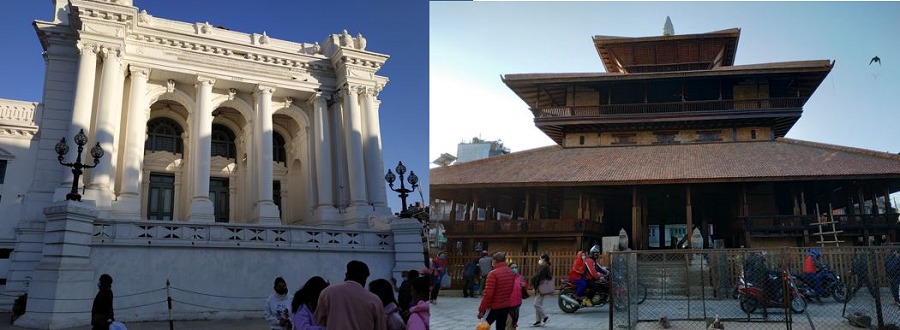
Image: Kathmandu Durbar Square ( Photo – Travel Biz News )