• Everest Fraud leads insurers to threaten a boycott
    February 4, 2019
    Everest Fraud leads insurers to threaten a boycott

    By Kai Schultz

    New Delhi- International insurance companies threatened to end travel coverage to Nepal if the government did not crack down on elaborate helicopter rescue scams that target foreigners trekking near Mount Everest and other high-altitude peaks.

    Last year, investigations by the Nepali government and Traveller Assist, a medical assistance company based in Ireland, found that some trek operators, guides, helicopter companies and even doctors and hospitals had conspired to bilk millions of dollars from insurance companies by pushing for emergency mountainside evacuations for minor illnesses, or when simpler treatment options were available.

    The guides preyed on trekkers when they were most vulnerable — trudging up remote trails, cold, wet, sick, confused and miles from any well-serviced towns.

    The Nepali government found evidence that some guides went as far as intentionally making hikers ill by spiking their food with large amounts of baking soda, which can cause vomiting, diarrhea and other ailments, and then calling for an emergency helicopter evacuation.

    These evacuations can cost as much as $40,000 each, depending on how many trekkers are on board, and insurance companies are often stuck with the bill.

    Jonathan Bancroft, the managing director of Traveller Assist, which represents three insurance underwriters, questioned why the government has yet to file charges against 17 Nepali companies accused of fraud or tax evasion.

    In a letter delivered to Nepal’s minister of tourism , Mr. Bancroft wrote that if the government did not bring charges against these companies, all of which are reportedly still in business, the insurance underwriters would cut off coverage for Nepal starting from Feb. 15.

    “To be clear, this is an ultimatum!” Mr. Bancroft wrote. “If our clients stop issuing travel insurance policies in Nepal, it won’t be long until other insurers do the same. This will have a devastating effect on the tourism industry in Nepal, and your country’s reputation.”

    The three insurance underwriters, which control 23 travel insurance brands that cover over 100,000 travelers to Nepal annually, were not identified in the letter. Their market share is sizable: Just over a million tourists visited Nepal last year. Many of them embarked on remote hikes flanked by some of the world’s highest mountains.

    Most trekking operators in Nepal are upstanding and see client safety as a key concern. Aware of the risks associated with traveling to high altitudes, many visitors buy travel insurance costing several hundred dollars, opting for plans that include emergency helicopter rescues. To ensure proper acclimatization on the way to places like Everest Base Camp, which sits more than 17,000 feet above sea level, hikes are spread over days.

    But according to government officials, insurers and employees in Nepal’s tourism industry, some mountain guides earn commissions from trekking operators by pressuring inexperienced hikers to be flown back to Kathmandu, the capital, at the first minor signs of altitude sickness.

    Trekkers are dissuaded from exploring other options, like taking medicine, going to clinics along the hiking route or simply descending a few thousand feet, which solves many cases of altitude sickness. As a scare tactic, the common cold or fatigue are sometimes purposefully mischaracterized as acute mountain sickness, which can be deadly in an advanced stage.

    In Kathmandu, hospitals involved in the fraud perform unnecessary tests, exaggerate symptoms and even hold on to trekkers’ passports to prevent them from leaving.

    In another version of the scam, healthy hikers agree to a helicopter rescue in exchange for a cut of money or a free ride off the trail.

    When bills are submitted for insurance claims, helicopter companies and hospitals inflate prices for their services. Multiple insurance claims are submitted for a single helicopter ride when more than one trekker is on board.

    Some trekking operators, which act as brokers and take a percentage of rescue fees from helicopter companies, make more money through evacuations than they do charging for hikes. The typical profit margin for each hiker heading to Everest might be just a few hundred dollars. Participating in the scam could net operators thousands of dollars in kickbacks.

    The investigation last year by Traveller Assist found evidence of fraud by four hospitals and 13 helicopter, charter and rescue companies. The separate investigation by Nepal’s government identified most of those same companies. A few dozen more trekking companies are thought to be involved.

    “To say this is a complex problem is an understatement,” said Danny Kaine, head of assistance at Traveller Assist. “Fraud and corruption in the helicopter rescue industry in Nepal are so ingrained in some companies. It has become an accepted way of doing business.”

    Insurance companies initially struggled to track the fraud, though it has been occurring since at least the early 2010s. But over the last few years, the number of insurance claims from Nepal shot up dramatically.

    Alarmed at the increase, travel insurance companies created internal blacklists of Nepali helicopter companies and hospitals, posted advisories warning trekkers of the scam and raised premiums.

    Traveller Assist found that about 1,600 helicopter rescues had occurred in Nepal from January to August 2018, out of which 35 percent were considered fraudulent, costing insurers some $4 million in losses.

    In September, Nepal’s government introduced a new monitoring program that required companies to submit bills to the department of tourism to ensure that they were genuine.

    But Mr. Bancroft, in his letter, wrote, “Not a single charge has been laid.” From September to December 2018, Traveller Assist determined that about 15 percent of some 1,600 rescues during that period were fraudulent.

    Ghanshyam Upadhaya, a spokesman for the ministry of tourism, said his office had sent their findings to other ministries — health, home, finance and civil aviation — but was waiting to hear back.

    Ramkrishna Subedi, a spokesman for the Home Ministry, shifted responsibility back to the Tourism Ministry to “take action.”

    Another government official who was formerly at the Tourism Ministry, speaking on condition of anonymity, said that nothing had been done on the issue

    Madhab Prasad Bhattarai, a Nepali lawyer, said corporate fraud was a criminal offense in Nepal, and tax evasion, which some companies are also accused of, could be considered a criminal or civil offense. Both are punishable by fines and jail time.

    But because fraud was committed against travel insurance companies based outside Nepal, the cases could be escalated to law enforcement agencies in countries like the United States or Britain. Foreign travel insurance companies that continue to entertain claims from Nepali companies charged with fraud could also be investigated, said Mr. Kaine of Traveller Assist.

    “It’s a vicious circle,” he said . “Some insurers and assistance providers are facilitating the fraud by paying large invoice amounts without any questions being asked. This makes our job all the more difficult.”

    Courtesy: New York Times / Jan. 2019

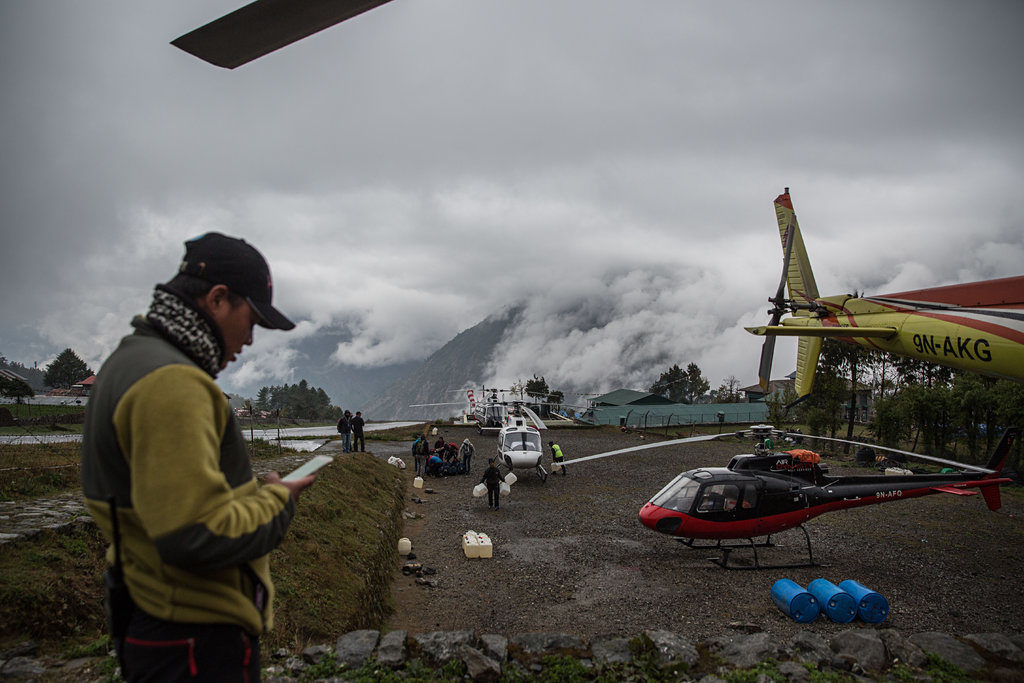
    Image : Rescue helicopter landing pads at the airport in Lukla, Nepal, near Mount Everest. Helicopter evacuations can cost as much as $40,000, depending on how many trekkers are on board. Credit -Lauren DeCicca for The New York Times

    • Connecting you with the world of travel and tourism

      Media Partners

      Asia Amusement & Attractions Expo 2026

      Theme Park Expo Vietnam 2025

      Asia Pool & Spa Expo , May 10 – 12, 2025 , Guangzhou , China

      KAZAKHSTAN International Exhibition “Tourism & Travel” Almaty, Kazakhstan

      Nihao China- Beyond your imagination

      China extends visa-free

      policy to UK, Canada

      China has decided to extend its visa waiver policy to ordinary passport holders from Canada and the United Kingdom starting Tuesday, when the Chinese New Year begins, a Foreign Ministry spokesperson announced on , saying the move aims to further facilitate cross-border travel.

      According to the spokesperson, ordinary passport holders from the two countries can enter China without visa and stay for up to 30 days for business, tourism, family/friends visit, exchange and transit purposes.The policy will be effective until Dec 31.

      Air India Orders 30

      Boeing 737 MAX Jets

      Air India  has ordered 30 more fuel-efficient 737 MAX jets, expanding its Boeing order book to nearly 200 airplanes across the company’s single-aisle and widebody airplane families. Boeing and Air India  announced an order for 30 fuel-efficient 737 MAX jets at the annual Wings Airshow in Hyderabad.

      The airline finalized an incremental purchase of 20 737-8 jets this month and an order for 10 737-10 airplanes was previously unidentified on Boeing’s Orders & Deliveries website. Both purchases exercised existing options as Air India expands its route network to meet rising travel demand.

      Air India will operate the new 737-8s, leveraging their dispatch reliability, fuel efficiency and range flexibility on high-frequency, domestic and short-haul regional routes. The airline also plans to deploy the larger 737-10 to maintain operational commonality and carry more passengers at the lowest cost per seat among single-aisle aircraft.

      As Air India expands its fleet and network, Boeing’s Commercial Market Outlook forecasts the Indian and South Asian region will need nearly 3,300 new airplanes over the next two decades with 90% of those single-aisle jets like the 737 MAX. ( February 2 , 2026 )

      WTTC chooses  Madrid

      for new Global Office

      London, UK: The World Travel & Tourism Council (WTTC) announced that its Operating Committee has unanimously approved Madrid in Spain as the location for the organisation’s new Global Office.

      Five destinations expressed interest in hosting the Global Office – Dubai (UAE), France, Italy, Spain and Switzerland – with the evaluation criteria based on six areas: office rental and operating costs; the tax, incentives and competitive environment; fast-track visas and work permit frameworks in the destination; government support; cost of living to attract and retain talent; and proximity to international organisations.

      The decision to choose Madrid was endorsed by all 17 members of WTTC’s Operating Committee, following a comprehensive assessment of WTTC’s long-term strategic and operational needs. Members agreed that Madrid offered the most attractive option due to the city’s competitiveness, a more favourable tax environment, government support, easier visa processing for employees and overall lower operating costs. Challenges linked to Brexit, such as constraints on talent mobility, made the UK less attractive as WTTC wishes to further build its leadership position and become even more agile in the sector.

      Madrid was also selected for its strong international connectivity via Madrid-Barajas Airport, competitive business environment, incentives from government, synergies with international organisations in the sector such as UN Tourism and alignment with WTTC’s global mission. The new office will form a central part of WTTC’s worldwide network, supporting its highly-respected advocacy, research and member engagement activities across the globe.

      Bangkok named Asia’s best

      holiday destination for 2025

      Bangkok has been ranked as the best city to visit in Asia for 2025 by Smart Travel Asia, a leading digital travel magazine, based on the opinions of hundreds of thousands of travellers and readers worldwide.

      The city received the highest votes in the “Best Holiday Destination in Asia” category, retaining its top position for the second consecutive year.

      Smart Travel Asia highlighted Bangkok’s strengths as its 24-hour vibrancy and diverse experiences, including food, culture, shopping, and the friendliness of its people, describing it as a “city full of energy and colour, day and night.”

      The city’s dominance stems from several compelling factors. Bangkok has emerged as a paradise for food enthusiasts, offering everything from legendary street food stalls to Michelin-starred restaurants and panoramic 360-degree rooftop bars. Its cultural and heritage sites, including the iconic Wat Phra Kaew, Wat Arun, and Wat Pho temples, remain major attractions to international tourists.

      Additionally, from luxury malls in the city centre to the Chatuchak weekend market, Bangkok caters to every type of shopper. Affordability and friendliness also play a key role, as Bangkok remains an accessible living cost destination where welcoming smiles continue to charm travellers.

      In the Smart Travel Asia 2025 rankings, Bali (Indonesia) and Tokyo (Japan) shared second place behind Bangkok, while Seoul (the Republic of Korea) and Luang Prabang (Laos) tied for fourth. Thailand further strengthened its tourism appeal with Chiang Mai placing third and Phuket sharing fifth place with Hong Kong (China).

      Having the three cities, Bangkok, Chiang Mai, and Phuket, in the top 10 highlights the diversity and appeal of Thailand’s tourism offerings for travellers worldwide. — VNA/VNS ( Oct.12, 2025)

      Gulf Cooperation Council Tourism 

      Dubai – As tourism destinations in the Gulf Cooperation Council (GCC) continue to grow, involving local communities in destination development has become increasingly vital for long-term success.

      Abu Dhabi’s Tourism Strategy 2030 aims for 39.3 million visitors per year, while Saudi Arabia’s Vision 2030 targets 150 million domestic and international visits, emphasising how tourism is being established as a key element of economic diversification throughout the region.

      At Arabian Travel Market (ATM) 2025, industry leaders emphasised that sustainable revitalisation of destinations must align tourism investments with community partnerships, cultural authenticity, and immersive guest experiences to provide lasting value for both residents and visitors.

      During the session on “Considerations and Implications of Involving Communities in Destination Revitalisation” on the ATM 2025 Global Stage, experts shared insights into building resilience, enhancing local prosperity, and ensuring tourism growth is both inclusive and enduring.

      Arabian Travel Market 2025, held under the theme “Global Travel: Developing Tomorrow’s Tourism Through Enhanced Connectivity”,  featured more than 200 speakers across three content stages and welcomes over 55,000 travel professionals from 166 countries.

      Messe Berlin India launched 

      to drive growth of ITB India 

      Messe Berlin announces the official launch of Messe Berlin India, a newly incorporated subsidiary that underscores the company’s long-term commitment to one of Asia’s fastest-growing markets. Headquartered in Delhi , the new entity will serve as a strategic base for expanding ITB India and launching future projects tailored to the Indian market. With this establishment, Messe Berlin is reinforcing its vision of India as a regional hub for innovation, collaboration, and sustainable business growth within the exhibition and events industry.

      “Messe Berlin’s presence in India reflects our strategic intent to strengthen our international reach by being where the growth is. India is a key market for us — vibrant, diverse, and full of opportunities. With Messe Berlin India, we are laying down long-term foundations to build strong partnerships, support local industries, and elevate our global platforms,” said Dr. Mario Tobias, CEO, Messe Berlin.

      ITB India, inaugurated in 2023, continues as the flagship event under the new subsidiary. Held annually, ITB India is a three-day B2B travel trade show and convention that connects the global travel and tourism industry with the Indian market. Alongside MICE Show India, Travel Tech India, and the ITB India Conference, ITB India serves as a unique platform to forge new partnerships, strengthen existing ties, and capitalize on the fast-growing potential of the Indian and South Asian travel economies. The show hosts key players from the MICE, Leisure, Corporate Travel, and Travel Technology sectors. The upcoming edition, ITB India 2025, will take place from 2 – 4 September 2025  in Mumbai.

      FACTS —

      Tourism helps in:

      👉Reducing poverty

      👉Reducing Inequalities

      👉Promoting gender equality

      👉Fostering decent work and economic growth

      World Tourism Day 2021: ‘Tourism for Inclusive Growth’

      In 2019, Travel & Tourism’s direct, indirect and induced impact accounted for:
      -US$8.9 trillion contribution to the world’s GDP
      -10.3% of global GDP
      -330 million jobs, 1 in 10 jobs around the world
      -US$1.7 trillion visitor exports (6.8% of total exports,
      28.3% of global services exports)
      -US$948 billion capital investment (4.3% of total
      investment)