• Great Passing away of Buddha
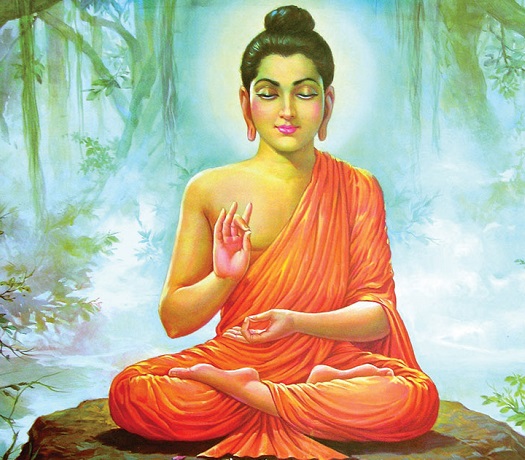
    Great Passing away of Buddha

    – Bhesh Jung Badal

    The lord left Vaishali accompanied by five hundred disciples (monks). On the way, he arrived at Pava and halted at the mango grove of a goldsmith named Chunda. Chunda was glad to hear this news. So he hastened to the lord and invited the lord and his order (disciples) to dine at his house on the morrow.

    Next day, Chunda prepared different varieties of foods– sweet rice, cake and a dish of pork (Some take this dish as mushroom) and announced the hour to the lord. The lord proceeded towards his house and partook the food served to, him. As and when the lord had partaken the meal, he felt an urge for dysentry and a great sharp pain disturbed him.

    The lord bore the pain without any complaint and proceeded towards Kushinagar. On the way, he took bath in the river Kakutsa, drank water and took a seat in its bank. The lord wished that Chunda may not reproach himself or he may not be reproached by others for serving the food which made him to die. So he asked Ananda to transmit his message to Chunda with the words: “After I am gone, tell Chunda that he will receive a great reward in future birth; for, having eaten of the food served by him, I am about to pass away. There are two gifts which will be blessed above all others. The first one is that of Sujata before my attainment of Buddhahood and this gift of Chunda before I finally pass away.”

    Thereafter, the lord, accompanied by Ananda, crossed the river Hiranyavati and arrived at the Saal grove of the Mallas. Here the lord asked Ananda to spread a couch between two Saal trees making the head of couch to turn towards the north. Then the Compassionate One lay himself down on his right side (lion bed). During that auspicious hours, the great god Brahma and many other deities appeared before and paid reverence to the Buddha with scented flowers and divine perfumes.

    Recalling this event, the lord told Ananda that worshipping with scented flowers and divine incense merely will not reverence or respect the Tathagata. Those who continually accomplish all the small and great 1uties and those who spend a correct life pursuing the Tathagata’s precepts reverence and respect him much.

    At this time, hosts of the gods and spirits were assembling to behold the passing away of the lord. Among them, some were lamenting at the thought of the lord’s death. They were expressing: “Too soon will the lord pass away! Too soon will the eye in the world pass away!” Understanding the weakness of some of these deities, the lord asked them to be free from passion and told them: “Impermanent, indeed, are all component things.”

    After this, the lord suggested that the lay disciples who rever the lord may take these four places as the sacred spots for pilgrimage and the places were:

    (1)       Lumbini, where the Tathagata took his birth;

    (2)       Buddhagaya, where the Tathagata attained the knowledge of Supramundane Enlightenment;

    (3)       Deer Park at Sarnath where the Tathagata first turned the wheel of law; and

    (4)       Kushinagar where the Tathagata passed away. These are the four worth visiting places where the monks, nuns and laity will come and pay their homage recollecting the sweet memory of the Tathagata.

    At this time, Ananda made many queries to the lord about the nature of their dealings with womenfolk. The lord replied him not to look at womenfolk while walking; not to talk with them if he happens to see her by chance; and to remain himself absorbed in mindfulness if the womenfolk herself comes to talk.

    To an another question raised by Venerable Ananda on how to utilise the mortal remains of the Buddha after his passing away, the lord told Ananda to cremate the body of the Buddha in the fashion of a dead chakravartin (universal monarch). He added further with the words:

    After the cremation, some monument or chaitya or stupa be made above the mortal remains of the All Enlightened One. While doing so,

    (1)       the bone ‘of the All Enlightened Ones, which were left behind, be utilized for making the monument (stupa or chaitya).

    (2),      the bone of Pratyaka Buddha (Individual Buddha) also are fit for constructing the monument.

    (3)       the bone of Arhat or Sravak Buddha (Disciple Buddha) also can be utilized in the same way.

    (4)       the bones of a universal monarch may also be utilized in this very’ manner.

    By seeing the monuments (Stupas), the lay disciples will recollect that this is th-e Stupa of the All Enlightened One; this is the Stupa of an Individual Buddha, this of an Arhat (Disciple Buddha); and this of a universal monarch. They can gladden their hearts and pay regards to the the stupa. Thus they will acquire virtue out of reverence towards the Enlightened Ones.

    Ananda who was listening the words of the lord could not resist his heart. Shedding tears on the recollection that the Buddha will be passing away very soon, Ananda went to a corner and began to weep placing both his hands upon the head. Seeing this situation, the lord asked Ananda not to weep and gave instructions “Every person whom we love in this world has to meet decay. Tragedy and seperation are the parts of life. Decay is inherent in all component things.

    He added further, “Ananda, you have served the Tathagata with all your mental, verbal and physical efforts. You have satisfied the lord by your, service and dedication. You have earned a lot of virtues in this way. You too will be liberated from the miseries of this world.”

    At this time, there was a wandering friar at Kushinagar named Subhadra. As he listened that the Buddha would be passing today, he hastened to the Saab grove and asked Ananda to arrange an audience with the lord. Ananda did not wish to disturb the lord at the last hours of his life. So he did not permit Subhadra to meet the lord.

    The Buddha came to know of this fact. He told Ananda that the Buddha is a rare phenomenon in the world. There is still time to meet such a rare phenomenon. After a while the Tathagata could not be seen. Therefore, send here to Subhadra. He has not come to disturb the Buddha. He has come to find the true path. Hearing these words, Ananda, took Subhadra to the lord. Subhadra sat in front of the lord bowing his head. Then he put forward his questions in this way: “Lord, all the ‘Masters claim their own path as the greatest one. Whether it is a right claim or not?”

    The lord responded: “Subhadra, this is not the time to give answer to such questions. But listen, I will show you the path.” After saying these words, the Buddha gave the following teachings:

    “Subhadra, in whatsoever religion, the Noble Eightfold Paths are not pursued properly, there cannot be found any kind f sainthood, be it of first, second, third or the fourth degree. In he religion where the Noble Eightfold Paths are abided by, there he sainthood can always be found. Whensoever the brethren ill abide themselves by the eightfold paths, the world will not be bereft of the enlightened ones.” These teachings made Subhadra to attain the fruits of the fourth degree (Arhat). He asked conversion from the lord unto is path and thus became the lord’s last disciple.

    After giving instructions to Subhadra, the Buddha called on to Ananda and told: “After my departure, you may think that the teacher (Sasta) has departed. Now we don’t have any teacher for listening the discourses. After my departure, let the w, taught by me, be your teacher.” After my death, the mendicants may not use the word “Brother (Abuso)” while addressing to the senior mendicants. They have to use the word ‘Ausman” or “Bhantay’, i.e., Revered r or Venerable Sir while addressing to their senior ones. But the senior one may use Abuso (brother) while addressing to the junior ones. If there is any doubt or misgiving among the mendicants in regard to the path showed by me, there is still time to make such queries.

    Ananda expressed his astonishment to these words of the lord. As no one came forward in response to this appeal, the lord expressed: “Decay is inherent in all component things; work out your salvation with diligence.’ And these were the last words of the Buddha.

    Thereafter the lord entered into the first absorption, and then into the second, third and fourth. Rising from the fourth absorption, he entered into the station of infinity of space, infinity of thought, infinity of voidness, infinity of consciousness and unconsciousness and then to infinity where both sensation and ideas passes away entirely. He passed again into these spheres in reverse order and as and when he reached the station of fourth or last absorption, the made a great departure from this world.

    ( B.J.Badal is freelance journalist )

    March 2021
    • Connecting you with the world of travel and tourism

      Media Partners

      Asia Amusement & Attractions Expo 2026

      Theme Park Expo Vietnam 2025

      Asia Pool & Spa Expo , May 10 – 12, 2025 , Guangzhou , China

      KAZAKHSTAN International Exhibition “Tourism & Travel” Almaty, Kazakhstan

      Nihao China- Beyond your imagination

      China extends visa-free

      policy to UK, Canada

      China has decided to extend its visa waiver policy to ordinary passport holders from Canada and the United Kingdom starting Tuesday, when the Chinese New Year begins, a Foreign Ministry spokesperson announced on , saying the move aims to further facilitate cross-border travel.

      According to the spokesperson, ordinary passport holders from the two countries can enter China without visa and stay for up to 30 days for business, tourism, family/friends visit, exchange and transit purposes.The policy will be effective until Dec 31.

      Air India Orders 30

      Boeing 737 MAX Jets

      Air India  has ordered 30 more fuel-efficient 737 MAX jets, expanding its Boeing order book to nearly 200 airplanes across the company’s single-aisle and widebody airplane families. Boeing and Air India  announced an order for 30 fuel-efficient 737 MAX jets at the annual Wings Airshow in Hyderabad.

      The airline finalized an incremental purchase of 20 737-8 jets this month and an order for 10 737-10 airplanes was previously unidentified on Boeing’s Orders & Deliveries website. Both purchases exercised existing options as Air India expands its route network to meet rising travel demand.

      Air India will operate the new 737-8s, leveraging their dispatch reliability, fuel efficiency and range flexibility on high-frequency, domestic and short-haul regional routes. The airline also plans to deploy the larger 737-10 to maintain operational commonality and carry more passengers at the lowest cost per seat among single-aisle aircraft.

      As Air India expands its fleet and network, Boeing’s Commercial Market Outlook forecasts the Indian and South Asian region will need nearly 3,300 new airplanes over the next two decades with 90% of those single-aisle jets like the 737 MAX. ( February 2 , 2026 )

      WTTC chooses  Madrid

      for new Global Office

      London, UK: The World Travel & Tourism Council (WTTC) announced that its Operating Committee has unanimously approved Madrid in Spain as the location for the organisation’s new Global Office.

      Five destinations expressed interest in hosting the Global Office – Dubai (UAE), France, Italy, Spain and Switzerland – with the evaluation criteria based on six areas: office rental and operating costs; the tax, incentives and competitive environment; fast-track visas and work permit frameworks in the destination; government support; cost of living to attract and retain talent; and proximity to international organisations.

      The decision to choose Madrid was endorsed by all 17 members of WTTC’s Operating Committee, following a comprehensive assessment of WTTC’s long-term strategic and operational needs. Members agreed that Madrid offered the most attractive option due to the city’s competitiveness, a more favourable tax environment, government support, easier visa processing for employees and overall lower operating costs. Challenges linked to Brexit, such as constraints on talent mobility, made the UK less attractive as WTTC wishes to further build its leadership position and become even more agile in the sector.

      Madrid was also selected for its strong international connectivity via Madrid-Barajas Airport, competitive business environment, incentives from government, synergies with international organisations in the sector such as UN Tourism and alignment with WTTC’s global mission. The new office will form a central part of WTTC’s worldwide network, supporting its highly-respected advocacy, research and member engagement activities across the globe.

      Bangkok named Asia’s best

      holiday destination for 2025

      Bangkok has been ranked as the best city to visit in Asia for 2025 by Smart Travel Asia, a leading digital travel magazine, based on the opinions of hundreds of thousands of travellers and readers worldwide.

      The city received the highest votes in the “Best Holiday Destination in Asia” category, retaining its top position for the second consecutive year.

      Smart Travel Asia highlighted Bangkok’s strengths as its 24-hour vibrancy and diverse experiences, including food, culture, shopping, and the friendliness of its people, describing it as a “city full of energy and colour, day and night.”

      The city’s dominance stems from several compelling factors. Bangkok has emerged as a paradise for food enthusiasts, offering everything from legendary street food stalls to Michelin-starred restaurants and panoramic 360-degree rooftop bars. Its cultural and heritage sites, including the iconic Wat Phra Kaew, Wat Arun, and Wat Pho temples, remain major attractions to international tourists.

      Additionally, from luxury malls in the city centre to the Chatuchak weekend market, Bangkok caters to every type of shopper. Affordability and friendliness also play a key role, as Bangkok remains an accessible living cost destination where welcoming smiles continue to charm travellers.

      In the Smart Travel Asia 2025 rankings, Bali (Indonesia) and Tokyo (Japan) shared second place behind Bangkok, while Seoul (the Republic of Korea) and Luang Prabang (Laos) tied for fourth. Thailand further strengthened its tourism appeal with Chiang Mai placing third and Phuket sharing fifth place with Hong Kong (China).

      Having the three cities, Bangkok, Chiang Mai, and Phuket, in the top 10 highlights the diversity and appeal of Thailand’s tourism offerings for travellers worldwide. — VNA/VNS ( Oct.12, 2025)

      Gulf Cooperation Council Tourism 

      Dubai – As tourism destinations in the Gulf Cooperation Council (GCC) continue to grow, involving local communities in destination development has become increasingly vital for long-term success.

      Abu Dhabi’s Tourism Strategy 2030 aims for 39.3 million visitors per year, while Saudi Arabia’s Vision 2030 targets 150 million domestic and international visits, emphasising how tourism is being established as a key element of economic diversification throughout the region.

      At Arabian Travel Market (ATM) 2025, industry leaders emphasised that sustainable revitalisation of destinations must align tourism investments with community partnerships, cultural authenticity, and immersive guest experiences to provide lasting value for both residents and visitors.

      During the session on “Considerations and Implications of Involving Communities in Destination Revitalisation” on the ATM 2025 Global Stage, experts shared insights into building resilience, enhancing local prosperity, and ensuring tourism growth is both inclusive and enduring.

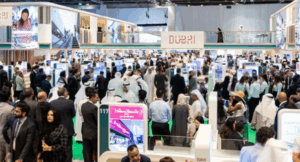
      Arabian Travel Market 2025, held under the theme “Global Travel: Developing Tomorrow’s Tourism Through Enhanced Connectivity”,  featured more than 200 speakers across three content stages and welcomes over 55,000 travel professionals from 166 countries.

      Messe Berlin India launched 

      to drive growth of ITB India 

      Messe Berlin announces the official launch of Messe Berlin India, a newly incorporated subsidiary that underscores the company’s long-term commitment to one of Asia’s fastest-growing markets. Headquartered in Delhi , the new entity will serve as a strategic base for expanding ITB India and launching future projects tailored to the Indian market. With this establishment, Messe Berlin is reinforcing its vision of India as a regional hub for innovation, collaboration, and sustainable business growth within the exhibition and events industry.

      “Messe Berlin’s presence in India reflects our strategic intent to strengthen our international reach by being where the growth is. India is a key market for us — vibrant, diverse, and full of opportunities. With Messe Berlin India, we are laying down long-term foundations to build strong partnerships, support local industries, and elevate our global platforms,” said Dr. Mario Tobias, CEO, Messe Berlin.

      ITB India, inaugurated in 2023, continues as the flagship event under the new subsidiary. Held annually, ITB India is a three-day B2B travel trade show and convention that connects the global travel and tourism industry with the Indian market. Alongside MICE Show India, Travel Tech India, and the ITB India Conference, ITB India serves as a unique platform to forge new partnerships, strengthen existing ties, and capitalize on the fast-growing potential of the Indian and South Asian travel economies. The show hosts key players from the MICE, Leisure, Corporate Travel, and Travel Technology sectors. The upcoming edition, ITB India 2025, will take place from 2 – 4 September 2025  in Mumbai.

      FACTS —

      Tourism helps in:

      👉Reducing poverty

      👉Reducing Inequalities

      👉Promoting gender equality

      👉Fostering decent work and economic growth

      World Tourism Day 2021: ‘Tourism for Inclusive Growth’

      In 2019, Travel & Tourism’s direct, indirect and induced impact accounted for:
      -US$8.9 trillion contribution to the world’s GDP
      -10.3% of global GDP
      -330 million jobs, 1 in 10 jobs around the world
      -US$1.7 trillion visitor exports (6.8% of total exports,
      28.3% of global services exports)
      -US$948 billion capital investment (4.3% of total
      investment)

      Tibet Travel : Daily Life of Living under Mount Everest