• WTTC: Japanese tourism recovering quicker
    December 15, 2011
    WTTC: Japanese tourism recovering quicker

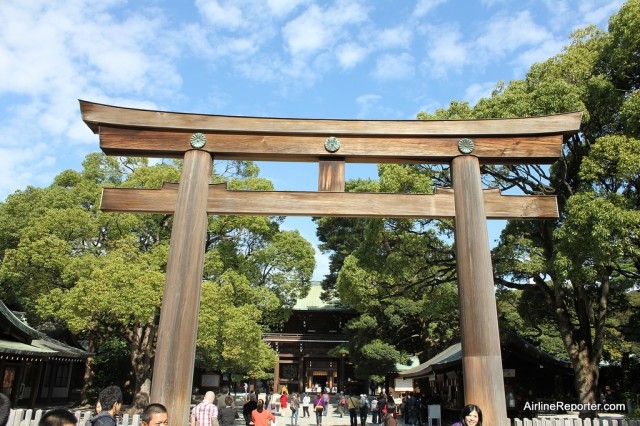
    Tokyo: Japan is back to normal operations and is welcoming tourists with open arms after the Tsunami that hit northern part of Japan on March 11,2011.
    Tourism was hit hard after the Tsunami. The numbers of visitors dropped over 72% in March compared to the March, 2010. Tourism has continued to slip and in September 2011 numbers were down almost 25% compared to 2010.

    According to the Japanese newspapers, it is safe to return to Japan and there are some pretty amazing deals going on right now.

    The World Travel & Tourism Council (WTTC) has announced the launch of the third of four quarterly reports into the recovery of the Japanese tourism industry following the Tohoku Tsunami earlier this year.

    According to the report – officially entitled The Tohoku Pacific Earthquake & Tsunami: Impact on Travel & Tourism – Update December 2011 – the tourism industry in the country has rebounded strongly in the second half of 2011 and more rapidly than previously expected.

    The first report, launched at the Global Summit in Las Vegas in May 2011, set three recovery scenarios and suggested the overall impact of the earthquake and tsunami could range from a reduction of ¥0.9 trillion (low impact scenario) to ¥1.9 trillion (high impact scenario) in the tourism contribution to Japan’s GDP in 2011.

    In the World Travel & Tourism Council’s second Japan report in September 2011, analysis of tourism data showed the recovery was in line with the low impact scenario, and more recent analysis shows that domestic and outbound tourism is now back to pre-March 2011 baseline, with inbound well on the way to recovery.

    Updated scenarios, based on this most recent data, suggest the total negative impact of the earthquake and tsunami on tourism’s contribution to Japan’s GDP will be roughly ¥0.7 trillion and confined largely to 2011.This is less than even the most optimistic ‘low impact’ scenario produced in the immediately after the disaster.

    Data from the Japan National Tourism Organisation and STR Global also suggest Japanese domestic and outbound tourism has recovered ‘losses’ to levels consistent with or better than forecasts made prior to the earthquake.

    Due to the dominance of domestic tourism relative to inbound tourism, this implies that total Japanese tourism demand and GDP will have recovered by the end of 2011.

    For the year as a whole there is a noticeable negative effect, but this should not have any lingering impact in 2012.
    This recovery can be attributed to the speed of the restoration of basic infrastructure immediately after the earthquake, and has been supported by the ongoing appreciation of the yen.

    Furthermore, airline data from Japan Airlines and All Nippon Airways suggest a quicker recovery in demand for long-haul destinations than for travel to other Asian destinations.This is in contrast to the inbound trends and may be due to a fundamental change in the pattern of demand.Inbound travel has yet to fully recover and for 2011 as a whole, foreign visitor arrivals are expected to be around 25 per cent lower than in 2010.

    Arrivals continue to be in line with previous WTTC low impact scenario, which states that international tourist arrivals will recover in numbers by early 2012.
    This is partly the result of growth in short-haul arrivals, by October arrivals from Hong Kong, China and Taiwan were back to, or above, October 2010 levels; and backed by strong performance in the Indian and Thai markets, although the latter has dropped off due to the severe flooding in Thailand.

    For long-haul markets, and especially European sources, the trend over recent months also appears to have been upwards, but improvement has been slower partly due to the eurozone debt crisis as well as some residual nervousness regarding nuclear safety.

    WTTC president David Scowsill stated: “Nine months after the devastating earthquake and tsunami which hit northeast Japan, the country’s tourism industry has exceeded even the most optimistic forecasts and is well on the way to recovery

    WTTC’s 12th Global Summit, to be held in Sendai and Tokyo on April 16t-19th 2012, will showcase Japan’s recovery and bring world tourism leaders together to demonstrate Japan really is open for business.”The final Japan update report will be a ‘one year after’ review launched in March 2012.

    • Connecting you with the world of travel and tourism

      Media Partners

      Asia Amusement & Attractions Expo 2026

      Theme Park Expo Vietnam 2025

      Asia Pool & Spa Expo , May 10 – 12, 2025 , Guangzhou , China

      KAZAKHSTAN International Exhibition “Tourism & Travel” Almaty, Kazakhstan

      Nihao China- Beyond your imagination

      Zhejiang Province , China

      Bangkok named Asia’s best

      holiday destination for 2025

      Bangkok has been ranked as the best city to visit in Asia for 2025 by Smart Travel Asia, a leading digital travel magazine, based on the opinions of hundreds of thousands of travellers and readers worldwide.

      The city received the highest votes in the “Best Holiday Destination in Asia” category, retaining its top position for the second consecutive year.

      Smart Travel Asia highlighted Bangkok’s strengths as its 24-hour vibrancy and diverse experiences, including food, culture, shopping, and the friendliness of its people, describing it as a “city full of energy and colour, day and night.”

      The city’s dominance stems from several compelling factors. Bangkok has emerged as a paradise for food enthusiasts, offering everything from legendary street food stalls to Michelin-starred restaurants and panoramic 360-degree rooftop bars. Its cultural and heritage sites, including the iconic Wat Phra Kaew, Wat Arun, and Wat Pho temples, remain major attractions to international tourists.

      Additionally, from luxury malls in the city centre to the Chatuchak weekend market, Bangkok caters to every type of shopper. Affordability and friendliness also play a key role, as Bangkok remains an accessible living cost destination where welcoming smiles continue to charm travellers.

      In the Smart Travel Asia 2025 rankings, Bali (Indonesia) and Tokyo (Japan) shared second place behind Bangkok, while Seoul (the Republic of Korea) and Luang Prabang (Laos) tied for fourth. Thailand further strengthened its tourism appeal with Chiang Mai placing third and Phuket sharing fifth place with Hong Kong (China).

      Having the three cities, Bangkok, Chiang Mai, and Phuket, in the top 10 highlights the diversity and appeal of Thailand’s tourism offerings for travellers worldwide. — VNA/VNS ( Oct.12, 2025)

      India resumes tourist visa for

      Chinese citizens after 5 years

      India announced  that it will open tourist visa applications to Chinese citizens from July 24, 2025. It was the first time in five years since the South Asian country suspended Chinese citizens’ tourist visa applications in February 2020.

      The Embassy of India in China announced via its Sina Weibo account  that, starting from July 24, 2025, Chinese citizens can apply for a tourist visa to visit India after completing an online application, scheduling an appointment, and personally submitting their passport and other required documents to three Indian visa application centers in Beijing, Shanghai, and Guangzhou in South China’s Guangdong Province.

      Responding to the related inquiry, Chinese Foreign Ministry spokesperson Guo Jiakun said  that “we take note of this positive move. Easing cross-border travel is widely beneficial. China will maintain communication and consultation with India to further facilitate travel between the two countries.”

      Chinese experts said the latest move taken by the India marks a phased milestone in the easing of relations between the two countries, and creates favorable conditions for further strengthening bilateral people-to-people exchanges.

      On February 2, 2020, India temporarily suspended its e-visa facility for Chinese travelers and foreigners residing in China amid coronavirus outbreak. – Global Times

      Gulf Cooperation Council Tourism 

      Dubai – As tourism destinations in the Gulf Cooperation Council (GCC) continue to grow, involving local communities in destination development has become increasingly vital for long-term success.

      Abu Dhabi’s Tourism Strategy 2030 aims for 39.3 million visitors per year, while Saudi Arabia’s Vision 2030 targets 150 million domestic and international visits, emphasising how tourism is being established as a key element of economic diversification throughout the region.

      At Arabian Travel Market (ATM) 2025, industry leaders emphasised that sustainable revitalisation of destinations must align tourism investments with community partnerships, cultural authenticity, and immersive guest experiences to provide lasting value for both residents and visitors.

      During the session on “Considerations and Implications of Involving Communities in Destination Revitalisation” on the ATM 2025 Global Stage, experts shared insights into building resilience, enhancing local prosperity, and ensuring tourism growth is both inclusive and enduring.

      Arabian Travel Market 2025, held under the theme “Global Travel: Developing Tomorrow’s Tourism Through Enhanced Connectivity”,  featured more than 200 speakers across three content stages and welcomes over 55,000 travel professionals from 166 countries.

      Messe Berlin India launched 

      to drive growth of ITB India 

      Messe Berlin announces the official launch of Messe Berlin India, a newly incorporated subsidiary that underscores the company’s long-term commitment to one of Asia’s fastest-growing markets. Headquartered in Delhi , the new entity will serve as a strategic base for expanding ITB India and launching future projects tailored to the Indian market. With this establishment, Messe Berlin is reinforcing its vision of India as a regional hub for innovation, collaboration, and sustainable business growth within the exhibition and events industry.

      “Messe Berlin’s presence in India reflects our strategic intent to strengthen our international reach by being where the growth is. India is a key market for us — vibrant, diverse, and full of opportunities. With Messe Berlin India, we are laying down long-term foundations to build strong partnerships, support local industries, and elevate our global platforms,” said Dr. Mario Tobias, CEO, Messe Berlin.

      ITB India, inaugurated in 2023, continues as the flagship event under the new subsidiary. Held annually, ITB India is a three-day B2B travel trade show and convention that connects the global travel and tourism industry with the Indian market. Alongside MICE Show India, Travel Tech India, and the ITB India Conference, ITB India serves as a unique platform to forge new partnerships, strengthen existing ties, and capitalize on the fast-growing potential of the Indian and South Asian travel economies. The show hosts key players from the MICE, Leisure, Corporate Travel, and Travel Technology sectors. The upcoming edition, ITB India 2025, will take place from 2 – 4 September 2025  in Mumbai.

      FACTS —

      Tourism helps in:

      👉Reducing poverty

      👉Reducing Inequalities

      👉Promoting gender equality

      👉Fostering decent work and economic growth

      World Tourism Day 2021: ‘Tourism for Inclusive Growth’

      In 2019, Travel & Tourism’s direct, indirect and induced impact accounted for:
      -US$8.9 trillion contribution to the world’s GDP
      -10.3% of global GDP
      -330 million jobs, 1 in 10 jobs around the world
      -US$1.7 trillion visitor exports (6.8% of total exports,
      28.3% of global services exports)
      -US$948 billion capital investment (4.3% of total
      investment)

      Tibet Travel : Daily Life of Living under Mount Everest