China’s voices at Boao conference – Multilateralism and BRI :Text of speech by President Xi Jinping
With the world in the midst of a coronavirus-induced economic and health crisis, China has called on all countries in Asia and beyond to uphold multilateralism, embrace openness, and enhance Belt and Road cooperation.
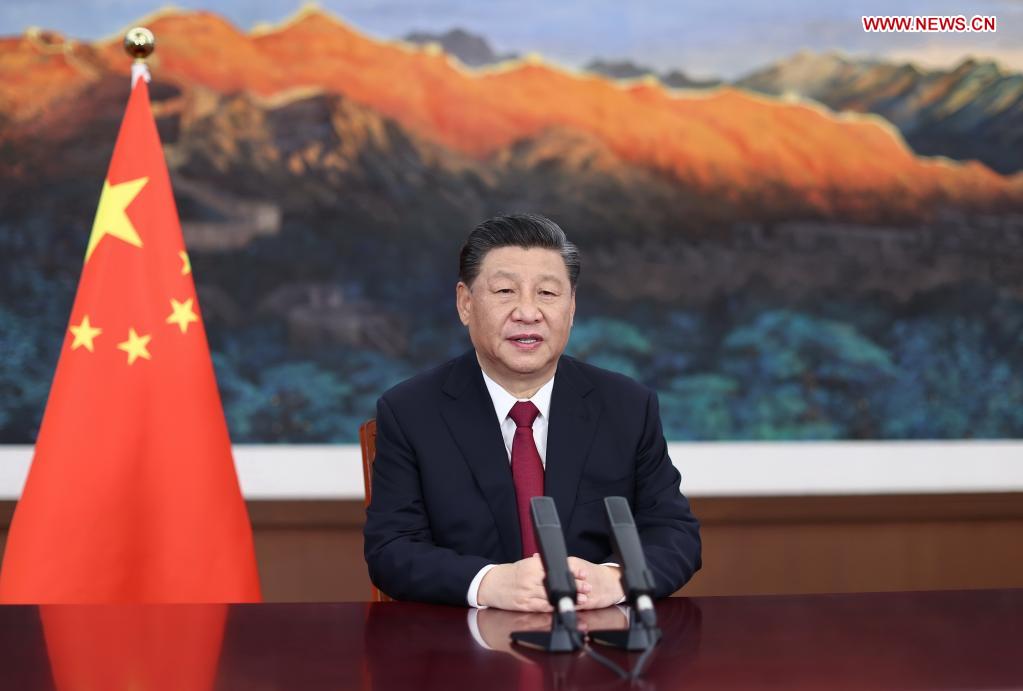
Chinese President Xi Jinping delivered the messages in a keynote speech via video link at the opening plenary of the Boao Forum for Asia (BFA) Annual Conference 2021 on Tuesday morning ( April 20 ).
The theme of the conference -“A World in Change: Join Hands to Strengthen Global Governance and Advance Belt and Road Initiative Cooperation” – is most opportune and relevant under the current circumstances, said Xi.
Similarly , world leaders attending the Boao Forum for Asia (BFA) called for strengthening global governance and multilateral cooperation to take on the challenges caused by the COVID-19 pandemic in Boao, south China’s Hainan Province.
Echoing calls for enhancing multilateral cooperation and inclusiveness to guard against the spread of protectionism, South Korean President Moon Jae-in stressed the importance of international solidarity and cooperation for coexistence and new prosperity in the post-coronavirus era.
Solidarity between countries remains important when the world is shifting from deep recession to recovery, along with digital transformation and the necessity of green investments, said IMF Managing Director Kristalina Georgieva, who called for further strengthening global cooperation.
New Zealand’s Prime Minister Jacinda Ardern highlighted the importance of international institutions in the fight against COVID-19, and said she looks forward to meeting President Xi at this year’s APEC summit hosted by her country.
In his opening remarks, Chairman of the Boao Forum for Asia and former UN Secretary General Ban Ki-moon noted that while COVID-19 vaccines are getting to market faster, developing nations risk lagging behind.
Striking an optimistic note, Yousef Abdullah Albenyan, vice chairman and CEO of SABIC, said 2021 could see the beginning of the end of the COVID-19 pandemic.
Over 2,600 delegates, including government officials, entrepreneurs and scholars from more than 60 countries and regions are attending the event themed, “A World in Change: Join Hands to Strengthen Global Governance and Advance Belt and Road Cooperation,” which is scheduled from April 18 to 21.
This year marks the 20th anniversary of the BFA, a non-governmental and non-profit international organization founded in 2001 to promote regional economic integration and development in Asia.
Source : CGTN
Excerpts – Keynote Speech by Xi Jinping , President of the People’s Republic of China at the Boao Forum for Asia Annual Conference 2021
“True friendship brings people close however far apart they may be.”
It gives me great pleasure to attend the Boao Forum for Asia Annual Conference 2021 and meet you all in this cloud meeting. Let me begin by extending, on behalf of the Chinese government and people and also in my own name, a warm welcome to all the guests participating both in person and online, and cordial greetings and best wishes to all friends old and new.
This year marks the 20th anniversary of the Boao Forum. Over these two decades, Asian countries have advanced regional economic integration and worked in unison to pursue both economic and social development, which has turned Asia into the most vibrant and promising region in the global economy. Asia has also stood with the rest of the world in the face of terrorism, the Indian Ocean tsunami, the international financial crisis, COVID-19 and other traditional and non-traditional security threats, which has helped maintain stability and security in the region. As an important member of the Asian family, China has kept deepening reform and opening-up while promoting regional cooperation, thus achieving progress and development in tandem with the rest of Asia and the world. It is fair to say that this Forum has borne witness to the extraordinary journey of China, of Asia and of the world, and has exerted a significant influence in boosting development in Asia and beyond.
This year’s annual conference is convened against a very special background. The theme of the conference—“A World in Change: Join Hands to Strengthen Global Governance and Advance Belt and Road Cooperation”—is most opportune and relevant under the current circumstances.
Now, the combined forces of changes and a pandemic both unseen in a century have brought the world into a phase of fluidity and transformation. Instability and uncertainty are clearly on the rise. Humanity is facing growing governance deficit, trust deficit, development deficit, and peace deficit. Much remains to be done to achieve universal security and common development. That said, there is no fundamental change in the trend toward a multi-polar world; economic globalization is showing renewed resilience; and the call for upholding multilateralism and enhancing communication and coordination has grown stronger. While we live in an age rife with challenges, it is also an age full of hope.
Where should humanity go from here? What kind of future should we create for future generations? As we try to answer these important questions, it is crucial that we bear in mind the shared interests of mankind and make responsible and wise choices.
China calls on all countries in Asia and beyond to answer the call of our times, defeat the pandemic through solidarity, strengthen global governance, and keep pursuing a community with a shared future for mankind.
– We need consultation on an equal footing to create a future of shared benefits. Global governance should reflect the evolving political and economic landscape in the world, conform to the historical trend of peace, development and win-win cooperation, and meet the practical needs in addressing global challenges. We need to follow the principles of extensive consultation, joint contribution and shared benefits, uphold true multilateralism, and make the global governance system more fair and equitable. We need to safeguard the UN-centered international system, preserve the international order underpinned by international law, and uphold the multilateral trading system with the World Trade Organization at its core. World affairs should be handled through extensive consultation, and the future of the world should be decided by all countries working together. We must not let the rules set by one or a few countries be imposed on others, or allow unilateralism pursued by certain countries to set the pace for the whole world. What we need in today’s world is justice, not hegemony. Big countries should behave in a manner befitting their status and with a greater sense of responsibility.
– We need openness and innovation to create a future of development and prosperity. Openness is essential for development and progress. It also holds the key to post-COVID economic recovery. We need to promote trade and investment liberalization and facilitation, deepen regional economic integration, and enhance supply, industrial, data and human resources chains, with a view to building an open world economy. We need to deepen partnerships for connectivity and strengthen infrastructural links to keep the arteries of economic activities unclogged. We must seize the historical opportunities in a new round of scientific and technological revolution and industrial transformation, boost the digital economy, and step up exchanges and cooperation in such areas as artificial intelligence, biomedicine and modern energy, so that the fruits of scientific and technological innovation can be turned into greater benefits for people in all countries. In this age of economic globalization, openness and integration is an unstoppable historical trend. Attempts to “erect walls” or “decouple” run counter to the law of economics and market principles. They would hurt others’ interests without benefiting oneself.
– We need solidarity and cooperation to create a future of health and security. In the ongoing fight against COVID-19, victory will be ours at the end of the day. We must put people and their lives above anything else, scale up information sharing and collective efforts, enhance public health and medical cooperation, and give full play to the key role of the World Health Organization (WHO). It is important that we bolster international cooperation on the R&D, production and distribution of vaccines and increase their accessibility and affordability in developing countries so that everyone in the world can access and afford the vaccines they need. It is also important that we take comprehensive measures to improve global governance on public health security and work together for a global community of health for all. We need to follow the philosophy of green development, advance international cooperation on climate change, and do more to implement the Paris Agreement on climate change. The principle of common but differentiated responsibilities must be upheld, and concerns of developing countries on capital, technology and capacity building must be addressed.
– We need commitment to justice to create a future of mutual respect and mutual learning. Diversity is what defines our world and makes human civilization fascinating. The COVID-19 pandemic has made it all the more clear to people around the world that we must reject the cold-war and zero-sum mentality and oppose a new “Cold War” and ideological confrontation in whatever forms. In state-to-state relations, the principles of equality, mutual respect and mutual trust must be put front and center. Bossing others around or meddling in others’ internal affairs would not get one any support. We must advocate peace, development, equity, justice, democracy and freedom, which are common values of humanity, and encourage exchanges and mutual learning among civilizations to promote the progress of human civilization.
In this context, I would like to announce that once the pandemic gets under control, China will host the second Conference on Dialogue of Asian Civilizations as part of our active efforts to promote inter-civilization dialogue in Asia and beyond.
I have noted on various occasions that the Belt and Road Initiative (BRI) is a public road open to all, not a private path owned by one single party. All interested countries are welcome aboard to take part in the cooperation and share in its benefits. Belt and Road cooperation pursues development, aims at mutual benefits, and conveys a message of hope.
Going forward, we will continue to work with other parties in high-quality Belt and Road cooperation. We will follow the principles of extensive consultation, joint contribution and shared benefits, and champion the philosophy of open, green and clean cooperation, in a bid to make Belt and Road cooperation high-standard, people-centered and sustainable.
– We will build a closer partnership for health cooperation. Chinese businesses have already started joint vaccine production in BRI participating countries such as Indonesia, Brazil, the United Arab Emirates, Malaysia, Pakistan and Turkey. We will expand cooperation with various parties in infectious disease control, public health, traditional medicine and other areas to jointly protect the lives and health of people in all countries.
– We will build a closer partnership for connectivity. China will work with all sides to promote “hard connectivity” of infrastructure and “soft connectivity” of rules and standards, ensure unimpeded channels for trade and investment cooperation, and actively develop Silk Road e-commerce, all in a bid to open up a bright prospect for integrated development.
– We will build a closer partnership for green development. We could strengthen cooperation on green infrastructure, green energy and green finance, and improve the BRI International Green Development Coalition, the Green Investment Principles for the Belt and Road Development, and other multilateral cooperation platforms to make green a defining feature of Belt and Road cooperation.
– We will build a closer partnership for openness and inclusiveness. A World Bank report suggests that by 2030, Belt and Road projects could help lift 7.6 million people from extreme poverty and 32 million people from moderate poverty across the world. We will act in the spirit of openness and inclusiveness as we work with all willing participants to build the BRI into a pathway to poverty alleviation and growth, which will contribute positively to the common prosperity of humankind.
The year 2021 marks the centenary of the Communist Party of China (CPC). Over the last century, the CPC has striven forward against all odds in a relentless pursuit of happiness for the Chinese people, rejuvenation for the Chinese nation, and the common good for the world. As a result, the Chinese nation has achieved a great transformation from standing up to growing rich, and to becoming stronger, and has thus made a notable contribution to human civilization and progress. China will continue to play its part in building world peace, promoting global development, and defending international order.
China will stay committed to peace, development, cooperation and mutual benefit, develop friendship and cooperation with other countries on the basis of the Five Principles of Peaceful Coexistence, and promote a new type of international relations. China will continue to carry out anti-COVID cooperation with the WHO and other countries, honor its commitment of making vaccines a global public good, and do more to help developing countries defeat the virus. However strong it may grow, China will never seek hegemony, expansion, or a sphere of influence. Nor will China ever engage in an arms race. China will take an active part in multilateral cooperation on trade and investment, fully implement the Foreign Investment Law and its supporting rules and regulations, cut further the negative list on foreign investment, continue to develop the Hainan Free Trade Port, and develop new systems for a higher-standard open economy. All are welcome to share in the vast opportunities of the Chinese market.
“By setting sail together, we could ride the wind, break the waves, and brave the journey of ten thousand miles.” We may at times encounter stormy waves and dangerous rapids, but as long as we pool our efforts and keep to the right direction, the giant vessel of human development will stay on an even keel and sail toward a brighter future. Thank you.
20 April, 2021