• Why tourist taxes will never solve the problem of overtourism ?
    February 16, 2019
    Why tourist taxes will never solve the problem of overtourism ?
    •  Justin Francis 

    Destinations around the world are raising more tourist taxes than a medieval king preparing for war, and predictably, it’s causing controversy.

    I’m of the opinion that taxes are more than justified.

    The tourism industry has consistently failed to acknowledge that it has a responsibility to destinations and their residents, as well as travelers.

    It’s a controversial approach, not without its flaws and certainly not a solution in itself. But this tactic is entirely justified and a direct result of the overtourism phenomenon.

    The industry has only itself to blame.

    Edinburgh has become the first British city to pass a tourism tax, proposed at £2 ($2.50) per room and capped at seven consecutive nights, with some 90 percent of residents thought to be supportive of the idea. At the time of writing, some two-thirds of EU member states impose a form of occupancy tax on tourists. This year we will see the introduction of taxes in Venice and tax for cruise passengers in Amsterdam, while Bath and Bristol are among other British cities mulling the idea. But while topical, tourist taxes are nothing new. In fact the idea dates to at least the early 16th century.

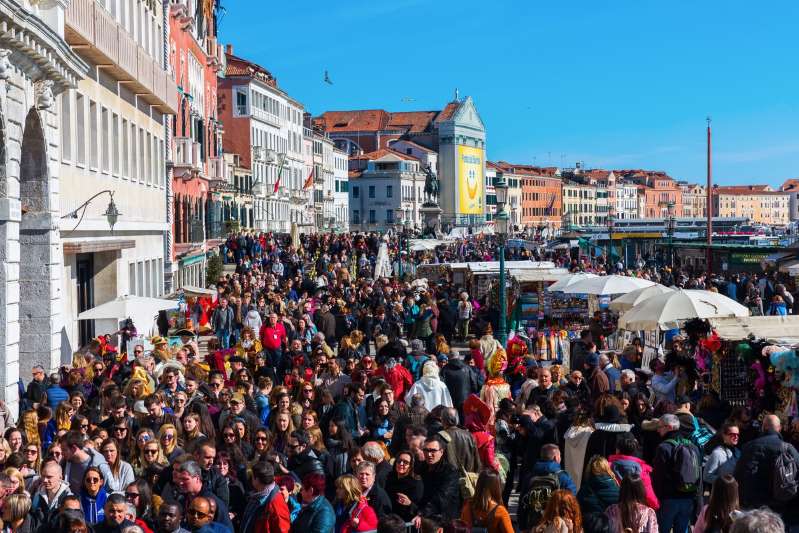
    The theory is that a tax on visitors can raise funds to offset some of the negative impacts of tourism. People who live in over-popular destinations suffer from crowding on the streets and public transport (that their own taxes pay for); steeply rising rents, and higher prices in local shops and restaurants; noise and antisocial behaviour; and increased strain on everything from waste removal services to water supply. No wonder that “anti-tourist” campaigns such as that recently seen in Barcelona are becoming more vocal.

    Taxes are relatively easy to collect, and they can be adjusted fairly to reflect the net benefits of different types of traveler. For instance, as the cruise industry demonstrably results in severe overcrowding and less local spending, it’s surely only fair that cruise passengers should be taxed more. Further, making both residents and visitors clearly aware of exactly how the money is being spent to offset the impacts of tourism should make people come around to the idea. A good example is Bali, where a proposed tourist tax is specifically targeted at pollution and waste management on the island.

    The tourism industry has historically been regarded as essentially benign, but there is a growing realization that this is rarely the case, that tourism is in fact freeloading – making money from places, communities, and the environment – without contributing to sustaining them. Many tourists and the companies they book with fail to appreciate that we are holidaying in someone else’s home. I feel that the price of a holiday rarely reflects the true cost to the destination itself.

    Now, of course, it can be and is argued that tourism boosts employment and infrastructure. In my view that’s a fallacy. Tourism cannot operate without jobs, airports and roads – it needs them just as much as local residents. To say that these are munificent gifts from tourism doesn’t negate the fact that the industry has a wider responsibility for sustaining the places it markets for profit.

    But will imposing taxes solve the problem? I don’t think so. If someone is considering the expense of buying a holiday, a small extra cost is unlikely to deter them. Perhaps it may dampen demand slightly, but when the tax is under €5($5.67) per night in some European cities, I doubt it will have much impact.

    Taxes in themselves do nothing to help with the core issue of sustainability. When planning for tourism, governments and tourism chiefs too often fail to identify the negatives as well as the positives. The perception tends to be that the more tourists, the better, which as we see in cities such as Venice, Dubrovnik and Barcelona, is not necessarily true.

    I can’t think of a situation where taxation alone will solve all of the problems that tourism creates. There are better, more effective ways to ensure a destination gets the types of visitors it needs and manages them well:

    A clear focus on the type of tourist and market that best suits the destination.

    Proper visitor management, including adequate public transport systems. For attractions, pre-booked tickets, timed entry, seasonal or intraday pricing are some tactics that can make a positive difference.

    If visitor numbers are too high, then tightening up cruise ship numbers, hotel and Airbnb rooms and flights, and cutting back on destination marketing, can all be effective.

    Responsible diversification of the tourism offer to spread the benefits more widely, and reduce pressure on the honeypot sites, but without simply shifting the problem somewhere else.

    Fundamental to all of this are two essentials. Firstly, ensuring that local residents have a stake in what type of tourism is developed, where and how; and secondly, that environmental impacts are also considered in planning.

    As I write about limiting tourism numbers and pricing people out I can already hear the cries of “elitism”, and I would answer them in the same way I always have. People perceive travel as a right. But our right to travel does not trump those of local residents, and neither should it outweigh the needs of the environment. Secondly, approaches such as making attractions bookable in advance, with fixed numbers, don’t penalize those who are less well off. They penalize those who just expect to turn up on the day and be given access.

    Raising taxes is a natural consequence for an industry that hasn’t paid its way. I think it’s entirely legitimate and I think we’re only going to see more of it.

    Justin Francis is the CEO of sustainable tourism company Responsible Travel.

    Courtesy : The Independent / Feb. 2019

    • Connecting you with the world of travel and tourism

      Media Partners

      Asia Amusement & Attractions Expo 2026

      Theme Park Expo Vietnam 2025

      Asia Pool & Spa Expo , May 10 – 12, 2025 , Guangzhou , China

      KAZAKHSTAN International Exhibition “Tourism & Travel” Almaty, Kazakhstan

      Nihao China- Beyond your imagination

      China extends visa-free

      policy to UK, Canada

      China has decided to extend its visa waiver policy to ordinary passport holders from Canada and the United Kingdom starting Tuesday, when the Chinese New Year begins, a Foreign Ministry spokesperson announced on , saying the move aims to further facilitate cross-border travel.

      According to the spokesperson, ordinary passport holders from the two countries can enter China without visa and stay for up to 30 days for business, tourism, family/friends visit, exchange and transit purposes.The policy will be effective until Dec 31.

      Air India Orders 30

      Boeing 737 MAX Jets

      Air India  has ordered 30 more fuel-efficient 737 MAX jets, expanding its Boeing order book to nearly 200 airplanes across the company’s single-aisle and widebody airplane families. Boeing and Air India  announced an order for 30 fuel-efficient 737 MAX jets at the annual Wings Airshow in Hyderabad.

      The airline finalized an incremental purchase of 20 737-8 jets this month and an order for 10 737-10 airplanes was previously unidentified on Boeing’s Orders & Deliveries website. Both purchases exercised existing options as Air India expands its route network to meet rising travel demand.

      Air India will operate the new 737-8s, leveraging their dispatch reliability, fuel efficiency and range flexibility on high-frequency, domestic and short-haul regional routes. The airline also plans to deploy the larger 737-10 to maintain operational commonality and carry more passengers at the lowest cost per seat among single-aisle aircraft.

      As Air India expands its fleet and network, Boeing’s Commercial Market Outlook forecasts the Indian and South Asian region will need nearly 3,300 new airplanes over the next two decades with 90% of those single-aisle jets like the 737 MAX. ( February 2 , 2026 )

      WTTC chooses  Madrid

      for new Global Office

      London, UK: The World Travel & Tourism Council (WTTC) announced that its Operating Committee has unanimously approved Madrid in Spain as the location for the organisation’s new Global Office.

      Five destinations expressed interest in hosting the Global Office – Dubai (UAE), France, Italy, Spain and Switzerland – with the evaluation criteria based on six areas: office rental and operating costs; the tax, incentives and competitive environment; fast-track visas and work permit frameworks in the destination; government support; cost of living to attract and retain talent; and proximity to international organisations.

      The decision to choose Madrid was endorsed by all 17 members of WTTC’s Operating Committee, following a comprehensive assessment of WTTC’s long-term strategic and operational needs. Members agreed that Madrid offered the most attractive option due to the city’s competitiveness, a more favourable tax environment, government support, easier visa processing for employees and overall lower operating costs. Challenges linked to Brexit, such as constraints on talent mobility, made the UK less attractive as WTTC wishes to further build its leadership position and become even more agile in the sector.

      Madrid was also selected for its strong international connectivity via Madrid-Barajas Airport, competitive business environment, incentives from government, synergies with international organisations in the sector such as UN Tourism and alignment with WTTC’s global mission. The new office will form a central part of WTTC’s worldwide network, supporting its highly-respected advocacy, research and member engagement activities across the globe.

      Bangkok named Asia’s best

      holiday destination for 2025

      Bangkok has been ranked as the best city to visit in Asia for 2025 by Smart Travel Asia, a leading digital travel magazine, based on the opinions of hundreds of thousands of travellers and readers worldwide.

      The city received the highest votes in the “Best Holiday Destination in Asia” category, retaining its top position for the second consecutive year.

      Smart Travel Asia highlighted Bangkok’s strengths as its 24-hour vibrancy and diverse experiences, including food, culture, shopping, and the friendliness of its people, describing it as a “city full of energy and colour, day and night.”

      The city’s dominance stems from several compelling factors. Bangkok has emerged as a paradise for food enthusiasts, offering everything from legendary street food stalls to Michelin-starred restaurants and panoramic 360-degree rooftop bars. Its cultural and heritage sites, including the iconic Wat Phra Kaew, Wat Arun, and Wat Pho temples, remain major attractions to international tourists.

      Additionally, from luxury malls in the city centre to the Chatuchak weekend market, Bangkok caters to every type of shopper. Affordability and friendliness also play a key role, as Bangkok remains an accessible living cost destination where welcoming smiles continue to charm travellers.

      In the Smart Travel Asia 2025 rankings, Bali (Indonesia) and Tokyo (Japan) shared second place behind Bangkok, while Seoul (the Republic of Korea) and Luang Prabang (Laos) tied for fourth. Thailand further strengthened its tourism appeal with Chiang Mai placing third and Phuket sharing fifth place with Hong Kong (China).

      Having the three cities, Bangkok, Chiang Mai, and Phuket, in the top 10 highlights the diversity and appeal of Thailand’s tourism offerings for travellers worldwide. — VNA/VNS ( Oct.12, 2025)

      Gulf Cooperation Council Tourism 

      Dubai – As tourism destinations in the Gulf Cooperation Council (GCC) continue to grow, involving local communities in destination development has become increasingly vital for long-term success.

      Abu Dhabi’s Tourism Strategy 2030 aims for 39.3 million visitors per year, while Saudi Arabia’s Vision 2030 targets 150 million domestic and international visits, emphasising how tourism is being established as a key element of economic diversification throughout the region.

      At Arabian Travel Market (ATM) 2025, industry leaders emphasised that sustainable revitalisation of destinations must align tourism investments with community partnerships, cultural authenticity, and immersive guest experiences to provide lasting value for both residents and visitors.

      During the session on “Considerations and Implications of Involving Communities in Destination Revitalisation” on the ATM 2025 Global Stage, experts shared insights into building resilience, enhancing local prosperity, and ensuring tourism growth is both inclusive and enduring.

      Arabian Travel Market 2025, held under the theme “Global Travel: Developing Tomorrow’s Tourism Through Enhanced Connectivity”,  featured more than 200 speakers across three content stages and welcomes over 55,000 travel professionals from 166 countries.

      Messe Berlin India launched 

      to drive growth of ITB India 

      Messe Berlin announces the official launch of Messe Berlin India, a newly incorporated subsidiary that underscores the company’s long-term commitment to one of Asia’s fastest-growing markets. Headquartered in Delhi , the new entity will serve as a strategic base for expanding ITB India and launching future projects tailored to the Indian market. With this establishment, Messe Berlin is reinforcing its vision of India as a regional hub for innovation, collaboration, and sustainable business growth within the exhibition and events industry.

      “Messe Berlin’s presence in India reflects our strategic intent to strengthen our international reach by being where the growth is. India is a key market for us — vibrant, diverse, and full of opportunities. With Messe Berlin India, we are laying down long-term foundations to build strong partnerships, support local industries, and elevate our global platforms,” said Dr. Mario Tobias, CEO, Messe Berlin.

      ITB India, inaugurated in 2023, continues as the flagship event under the new subsidiary. Held annually, ITB India is a three-day B2B travel trade show and convention that connects the global travel and tourism industry with the Indian market. Alongside MICE Show India, Travel Tech India, and the ITB India Conference, ITB India serves as a unique platform to forge new partnerships, strengthen existing ties, and capitalize on the fast-growing potential of the Indian and South Asian travel economies. The show hosts key players from the MICE, Leisure, Corporate Travel, and Travel Technology sectors. The upcoming edition, ITB India 2025, will take place from 2 – 4 September 2025  in Mumbai.

      FACTS —

      Tourism helps in:

      👉Reducing poverty

      👉Reducing Inequalities

      👉Promoting gender equality

      👉Fostering decent work and economic growth

      World Tourism Day 2021: ‘Tourism for Inclusive Growth’

      In 2019, Travel & Tourism’s direct, indirect and induced impact accounted for:
      -US$8.9 trillion contribution to the world’s GDP
      -10.3% of global GDP
      -330 million jobs, 1 in 10 jobs around the world
      -US$1.7 trillion visitor exports (6.8% of total exports,
      28.3% of global services exports)
      -US$948 billion capital investment (4.3% of total
      investment)